
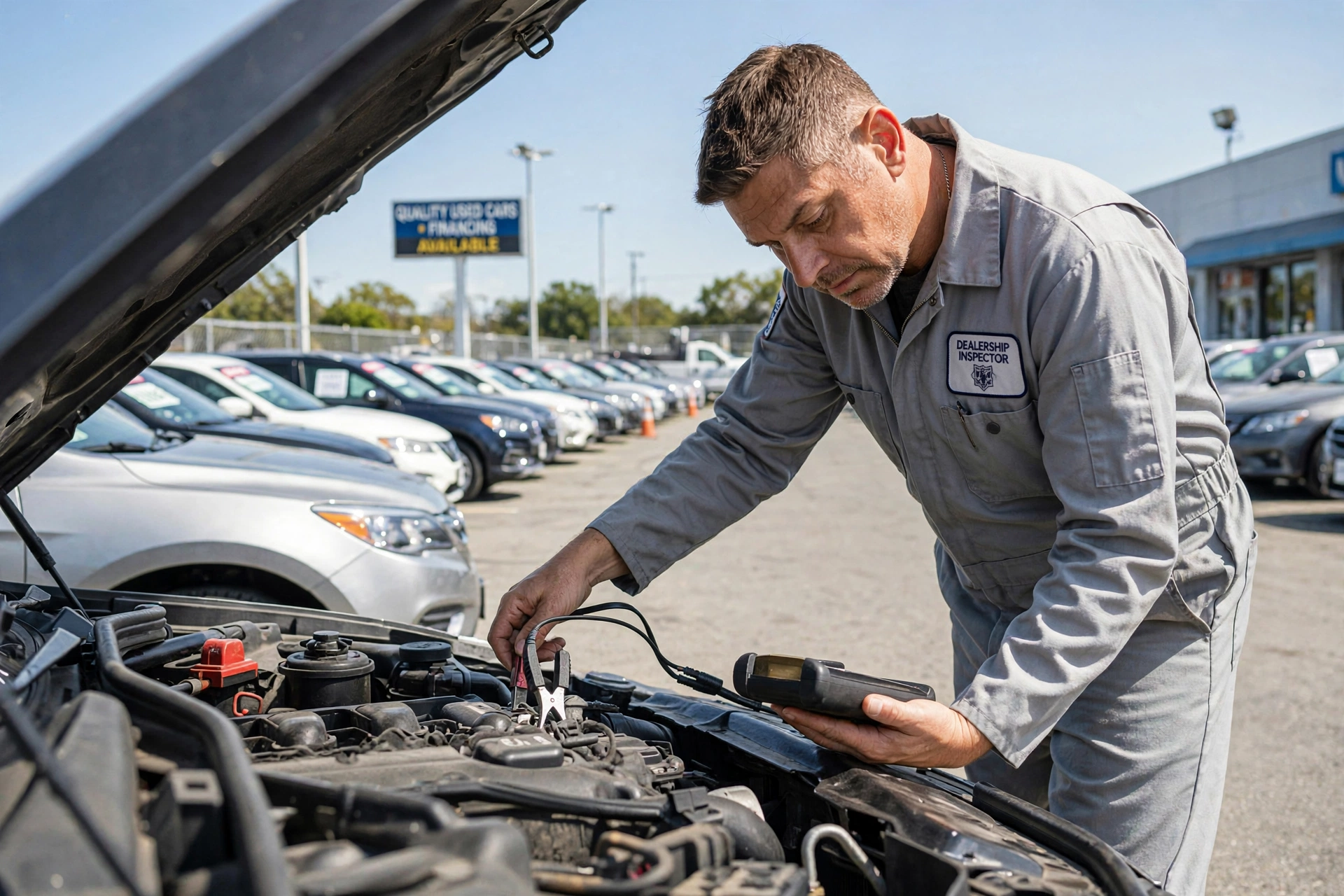
Most dealers lose $1,200 on every third trade because of nine appraisal mistakes.
Here’s how to stop the loss.
Used car appraisal gross protection 2026 starts with disciplined offers, fast decisions, and written accountability.
| Mistake | Gross Lost | Fix | Tool |
| Book value sets the offer | $800 to $2,000 | Check market days supply | VIN-specific market report |
| Recon gets guessed too low | $500 to $1,500 | Build recon before offering | Recon checklist |
| Damage goes undocumented | $300 to $1,200 | Record a four-square video | Dealer phone |
| History gets skipped | $750 to $3,000 | Check all available records | CARFAX, auction reports, DMS |
| Competitors get ignored | $500 to $1,500 | Search live retail listings | Marketplace search |
| Retail decision comes late | $400 to $1,000 | Choose the exit early | Wholesale and retail worksheet |
| One appraiser owns the number | $500 to $1,200 | Require a second review | Manager approval |
| Holding cost stays out of the offer | $300 to $900 | Charge every aging day | Floorplan calculator |
| Nobody wants the car | $1,000 to $3,000 | Apply the buyer test | Written appraisal note |
#1 Never Trust Book Value Alone, Use Market Days Supply
Book value shows historical transactions and reported market data. Your checkbook needs tomorrow’s exit number.
Start with a VIN-specific supply inside your selling radius. A 28-day supply supports a stronger offer than a 94-day supply. Two vehicles with the same book value deserve different numbers when one has 14 local competitors and the other has four.
Check:
- Trim
- Drivetrain
- Mileage band
- Color
- Equipment
- Accident history
A four-wheel-drive truck with the right package deserves more attention than a base model dressed up by an optimistic guide value.
Set your offer from expected retail, required front gross, recon, pack, and holding cost. Use book as one reference point. Never let book close the appraisal.
Action: Add market days supply and active unit count to every appraisal today.#2 Reconditioning Cost Check BEFORE You Offer
A $1,500 recon guess often becomes a $2,700 repair order. The missing $1,200 comes straight from front gross.
Walk the vehicle with a fixed checklist. Price tires by tread depth. Measure brakes. Test every warning light, camera, seat motor, window, key, and driver-assistance feature.
Confirm whether the store has one key or two. Scan for stored codes when mileage, condition, or warning history raises concern.
Use standard costs:
- Four tires might mean $850.
- A second key might mean $350.
- Paintless dent repair needs a fixed estimate.
- Wheel repair, glass, brakes, detail, and transport need real numbers beside them.
Stop using “about a grand” as a recon plan. Build the number before presenting the offer.
Action: Put labor hours and parts estimates on the appraisal sheet before approving a trade value.#3 The 4-Square Walkaround Video, Document Everything
Shoot four sides in one continuous video. Add the roof, interior, dash, tires, VIN plate, odometer, startup, and visible damage. Record sound when the engine starts cold.
Video settles arguments. Sales cannot say a dent appeared after delivery. Service cannot claim worn tires arrived as a surprise. The used-car manager gets a clean record of vehicle condition at appraisal time.
Keep the process under three minutes. Store the video with the appraisal record or stock number.
Require narration for:
- Cracked glass
- Warning lights
- Smoke or pet odor
- Missing equipment
- Body damage
- Mismatched tires
A silent video from 20 feet away protects nobody.
Action: Require a narrated walkaround video before any manager pencils the trade.#4 CARFAX + Auction Check + Service History
One history source leaves gaps.
Review the CARFAX report for accident entries, ownership changes, registration regions, rental use, commercial use, mileage movement, and service patterns.
Then check auction announcements and prior sale records. Pull your DMS history when your store or dealer group serviced the vehicle.
Service history often reveals more than the appraisal lane. Repeated electrical complaints, oil-consumption work, transmission diagnosis, or declined repairs belong in the offer.
Watch for vehicles bought at auction six months earlier and traded after limited use. Find the reason before owning the problem.
History changes both value and exit strategy. A rough-history unit might still work as wholesale inventory. Paying clean-retail money creates the loss.
Action: Attach CARFAX, auction history, and internal service records before final approval.#5 The 10-Minute Competitor Search, What’s It Listed for NOW
Search the exact year, trim, drivetrain, and a tight mileage range. Focus on real competitors within your normal customer radius.
Ignore the highest listing. Study the first page customers see.
Record:
- Price
- Mileage
- Accident history
- Certification
- Days listed
- Dealer reputation
Then identify where your vehicle would rank after recon.
Suppose six comparable SUVs sit between $27,900 and $29,400. Your planned retail price of $30,995 has no support unless equipment, condition, or warranty creates a clear reason.
Use asking prices as position data, not proof of sale value. Leave room for price reductions and negotiation.
Ten minutes now prevents a 70-day unit later.
Action: Save three live comparable listings with every retail appraisal.#6 Wholesale vs. Retail Decision in the First 5 Minutes
Choose the likely exit before building the offer.
Retail candidates fit your brand, price bands, customer demand, recon capacity, and inventory plan.
Wholesale units carry the wrong age, mileage, history, condition, or market supply for your store.
Do not force a retail story onto every trade. A vehicle expected to bring $16,500 at auction with $450 in fees and transport has a different offer ceiling from a clean retail candidate expected to sell for $21,995.
Mark each appraisal as one of the following:
- Retail
- Wholesale
- Pending diagnostic review
If the decision needs a shop inspection, hold the final number until the inspection arrives.
Action: Add an exit-path field to the appraisal form and require completion within five minutes.#7 The Second Set of Eyes Rule
Every meaningful trade needs another manager’s review. Familiarity creates blind spots, especially during a busy Saturday close.
The second reviewer checks condition, history, market supply, recon, and exit value. The reviewer also looks for emotional over-allowance used to save a weak deal.
Set a threshold. For example, require review on:
- Every trade above $20,000
- Every luxury unit
- Every modified vehicle
- Every appraisal more than $1,000 above the system recommendation
The process takes minutes. A missed structural repair, bad trim call, or unsupported retail target costs far more.
Track overrides by manager. Frequent overrides with weak results expose a training problem.
Action: Start a two-manager approval rule for high-risk and high-dollar trades.#8 Floorplan-Aware Offer Formula
Your offer formula needs a holding-cost line.
Start with a realistic sale price. Subtract:
- Target front gross
- Reconditioning
- Pack
- Expected discount
- Acquisition expense
- Projected holding cost
The remaining number sets your ceiling.
A $25,000 unit carrying a 10 percent annual floorplan rate costs about $6.85 per day in interest before curtailments and other expenses. Sixty days adds about $411. Add two price reductions and gross slips again.
Use days supply to set the aging assumption. Fast units might carry a 30-day estimate. Slow trims need 60 or 75 days. Your offer should absorb the risk before the vehicle reaches the lot.
Related: 7 Inventory Aging Triggers That Help Cut Floorplan Costs
Action: Add projected days in stock and holding expenses to your offer worksheet.#9 The “Would I Buy It?” Gut Check
Finish the data review with one direct test:
Would you buy this unit for your own department at the proposed amount without a retail deal attached?
Remove the customer’s payment target, the salesperson’s pressure, and the new-car gross. Look only at the vehicle and your exit.
Write down the reason for ownership.
“Clean one-owner truck, 31-day supply, $1,100 recon, priced third in market” supports a decision.
“Need the deal” does not.
Gut instinct has value after the numbers are complete. Experience picks up smoke odor, poor repairs, odd tire wear, hard use, and stories no guide captures. Instinct without evidence becomes guessing.
If you would pass on the same unit at auction for the proposed trade amount, lower the offer or send the deal upstairs.
Action: Require one written sentence explaining why your store should own every trade.Sponsored by Gas.net — powering dealership growth through intelligent data.
Alt text: “Gas.net connects franchise dealers with integrated analytics and marketing tools.”